
Love Island: The Game
Fusebox GamesSimulation
4.43.91K Reviews
- Version
- 1.7.6
- Installs
- 5.00M
- Age Rating
- Teen
Screenshots




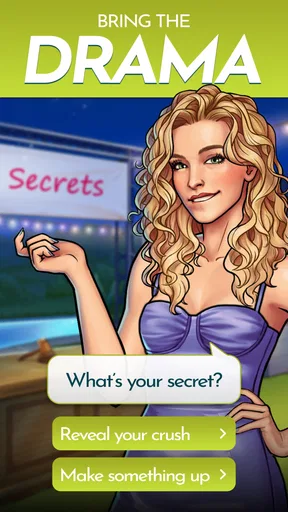



Our Review of Love Island: The Game
 Analysis by Appyee
I approached Love Island: The Game as a light, choice-led romance rather than a demanding simulation, and that is the right way to enjoy it. Its appeal is the chance to shape a villa story through conversations, pairings and reactions, with enough reality-show tension to make a quiet break feel more eventful. I would recommend it to players who enjoy character drama and making decisions for a fictional version of themselves; it is less suited to anyone looking for deep simulation systems, fast action or a romance that stays calm and predictable.
Where the game stands now
Developed by Fusebox Games, this free simulation game is built around interactive romantic stories told in episodes and chapters. Its current version is 1.7.0, and the game was released on January 26, 2022. That gives a useful snapshot of its life so far, but it does not, by itself, tell me which story content changed between versions. I treat the version number as a practical detail for players checking compatibility, not proof of a particular new feature or a complete redesign.
The game has an average rating of 4.3 from around 29,000 ratings, with roughly 3,300 written reviews and over 5 million installs. Those figures suggest that it has found a substantial audience, but they do not guarantee that every season or storyline will suit a new player. I would judge it by the kind of play it offers: reading scenes, choosing how to respond, and seeing how a social situation develops rather than mastering a complex set of simulation controls.
It is free to download, with in-app purchases ranging from $0.49 to $79.99 per item. That range is worth noticing before you settle into a long session. A free starting point can make it easy to try the writing and see whether the tone works for you, while optional purchases can affect how comfortable it feels to keep moving through the experience. I recommend deciding your own spending limit before you begin, rather than letting a dramatic moment make the decision for you.
A familiar villa, with choices at the center
Ever wondered what it’s like to be on a sun-soaked island surrounded by beautiful people, all vying for love and drama? Well, with Love Island: The Game, you get to dive right into such an experience, and let me tell you, it’s quite the ride!
Upon launching the game, the vibrant colors and catchy tunes immediately transport you to a tropical paradise. It feels like stepping into a reality TV show, and you’re the star. The graphics are fun and lively, creating an immersive environment that keeps you hooked from the get-go.
One thing I noticed right away is the game’s attention to detail. From the characters’ facial expressions to the lavish villa setting, everything is meticulously designed to make you feel like you’re really on the island. You can customize your avatar to suit your style, choosing from a variety of hairstyles, outfits, and accessories. This personalization aspect is a nice touch, making the experience feel unique to each player.
How choices shape a story session
The gameplay is all about making choices that affect your journey on the island. You decide who to couple up with, who to flirt with, and who to avoid. Your choices impact the storyline, leading to different outcomes and relationships. It’s like a choose-your-own-adventure book but with a romantic twist!
You’ll engage in conversations, challenges, and dramatic recoupling ceremonies. The dialogue options are varied, allowing you to craft your own narrative. Whether you choose to be the charming flirt or the strategic thinker, your decisions shape your path, making each playthrough fresh and exciting.
For me, the most useful way to approach those options is to choose a consistent attitude for the character I want to play, then break from it when a scene gives me a good reason. If every answer is selected only to maximize the immediate romantic payoff, the character can feel less like mine and more like a sequence of tactical clicks. A playful, loyal or deliberately complicated approach gives the story a clearer personality, even when the plot throws an awkward choice into the mix.
There is also a practical reason to slow down before tapping. In a choice-driven story, dialogue can carry social consequences, and an answer that sounds harmless to me may read as flirtation, rejection or provocation in context. I try to read the whole exchange before choosing, especially around a coupling decision or a tense conversation. That small habit makes the drama feel earned and reduces the frustration of picking an option just because it looked best in isolation.
Romance, tension and the reality-show mood
If you’re a fan of drama and romance, this game is right up your alley. The interactions between characters can be intense and unpredictable. One moment you’re sharing a romantic sunset, and the next, you’re caught in a love triangle. It’s this unpredictability that adds an exciting element to the game. You never know what might happen next, keeping you on the edge of your seat.
The game also does a fantastic job of capturing the essence of the reality show. The banter, the gossip, and the unexpected twists are all there, making for an authentic Love Island experience. It’s easy to get emotionally invested in the characters and their relationships, which speaks volumes about the game’s engaging storytelling.
That emotional investment is a strength, but it also explains why this is not the right choice for every mood. If I want a low-stakes story where every character behaves gently and misunderstandings resolve quickly, the villa’s flirtation and gossip can feel tiring rather than entertaining. I would save it for a moment when I actively want a little melodrama. Players who prefer quiet relationship stories may be happier with a romance game that focuses on private conversations and gradual intimacy instead of a crowded social setting.
A realistic way to fit it into an ordinary day is to play a short stretch during a commute or while winding down after dinner, then stop at a natural pause in the story. The episodic structure makes that kind of casual visit feel more manageable than a long session that demands constant attention. I would avoid starting a consequential scene when I have only a few distracted minutes, though: reading carefully is part of the enjoyment, and a rushed choice can leave me wondering what I missed.
Challenges, customization and the pace of play
Apart from the social dynamics, Love Island: The Game includes fun mini-games and challenges that test your skills and decision-making. These activities break up the narrative, offering a nice change of pace. Completing challenges earns you rewards, which can be used to unlock new outfits and accessories, adding another layer of customization.
These challenges are not just entertaining but also add to the strategic element of the game. Choosing when to compete and when to relax becomes a part of your strategy, influencing your journey on the island.
The balance between story scenes and activities is helpful for players who like some variety, but it will not turn the game into a conventional management simulator. The central pleasure remains social storytelling: the challenges are a change of rhythm, not a replacement for the conversations and relationship choices. If you are coming from a simulation game where planning resources, building structures or optimizing a detailed system is the main attraction, this is a very different sort of play.
Customization is best treated as a personal touch rather than a promise that appearance alone will steer the narrative. I enjoy choosing a look that suits the character I have in mind, because it makes the role-play more vivid. I would not approach wardrobe choices as a guaranteed shortcut to a particular relationship outcome. Instead, I treat the avatar as a way to make the story feel like my version of the villa, while paying closer attention to dialogue when I want to influence how scenes unfold.
For a more relaxed play routine, I would separate story choices from cosmetic browsing. First, decide whether you want to continue the current scene; then spend time on appearance or rewards when you are in the mood to personalize. That keeps the social thread in focus and makes customization feel like a treat, rather than an interruption every time the story gets interesting. It is a small workflow adjustment, but it suits a game whose momentum depends on following conversations and reactions.
Who will enjoy it, and what alternatives do better
I see this as a strong fit for readers who like romance with an ensemble cast, enjoy choosing a persona, and do not mind conflict being part of the entertainment. It is also an easy option for someone curious about interactive fiction who wants a colorful, reality-show setting rather than a fantasy kingdom or a detective mystery. The Teen content rating gives families a useful age-category reference, though I would still consider whether the game’s romantic themes and interpersonal drama suit the individual player.
It is a weaker fit for anyone who wants uninterrupted action, a competitive multiplayer focus, or a simulation built around managing a business or a home. It may also frustrate players who expect every choice to produce a clearly visible and immediate consequence. Story decisions can contribute to a larger arc, so I would not judge a choice only by the next line of dialogue. If you prefer direct control and transparent cause-and-effect, a puzzle or strategy game will likely feel more satisfying.
Compared with other romance and interactive-story games, the distinctive draw here is the reality-dating-show setup: group dynamics, coupling decisions, gossip and public drama give the romance a social stage. A more traditional visual novel may offer a tighter focus on one relationship, while a life simulator may provide more open-ended routines and systems. I would choose this game when I want the feeling of being part of a cast and reacting to shifting alliances; I would choose those alternatives when I want a quieter, more private romance or broader control over a simulated world.
One trade-off is that a branching story encourages replaying choices, but replay is most rewarding when I genuinely want to explore a different character or relationship path. Repeating scenes simply to hunt for an imagined perfect route can turn the experience into bookkeeping. My tip is to make a first run based on instinct, then revisit the story only if a different persona sounds fun. That keeps the decisions personal and makes alternate outcomes feel like a new role-play rather than a checklist.
Another useful expectation to set is that the game is designed for reading, not for passive background play. I would not recommend tapping through dialogue while doing something that regularly pulls my attention away; missing a line can make a later reaction seem arbitrary. If I have only a few seconds, I wait for a cleaner break. If I have a relaxed stretch of time, I can settle in and enjoy the build-up between choices. That difference matters more here than it would in a game based on quick, repeatable rounds.
Version, value and what I would watch next
At version 1.7.0, the game has a concrete current version players can check when considering installation. The release date places its launch in January 2022, but I would not infer a particular update history from those two facts alone. For an existing player, the practical question is whether the version available on their device supports the story experience they want to continue. For a newcomer, it is enough to know the current version and judge the game by its present mix of romance, social choices and challenges.
The free price makes trying it less of a commitment than buying a full-priced game, but the in-app purchase range is broad enough that I would pay attention to optional spending. I would treat purchases as a personal convenience, not as something required to enjoy the premise. Before buying anything, I would ask whether it improves the part I actually value—story progress, character presentation or simply a smoother session—and whether the cost feels reasonable to me. If the answer is unclear, there is no need to decide in the middle of an emotionally charged scene.
For existing players, the most important thing to watch is whether future version changes improve the parts they already care about: the readability of story choices, the flow between narrative and activities, and the ease of returning to an ongoing plot. Those are expectations, not claims about planned updates. A version number can change without telling a player what changed in practice, so I would look for clear release notes when available and judge any update by how it affects my own play rather than assuming every update adds new story content.
For a new player, the questions I would answer before installing are straightforward: Do I enjoy reading dialogue? Am I comfortable with romance and social conflict? Do I want to shape a fictional character through choices, rather than control a detailed simulation? And am I willing to keep optional purchases within a limit that feels right to me? If the answers point toward story-led play, this is an inviting way to spend a few relaxed sessions. If they point toward mechanics, competition or complete freedom to build a world, another genre will probably be a better match.
My verdict after spending time with the villa
Overall, Love Island: The Game is a delightful blend of romance, drama, and strategy. It captures the chaotic charm of the reality show while giving players the freedom to create their own story. Whether you’re a fan of the TV show or just looking for a fun way to escape into a world of sun, sea, and love, this game offers something for everyone.
So, if you’re ready to embark on a whirlwind adventure filled with love and laughter, give it a try. Who knows, you might just find your perfect match!
Verdict
Strengths of Love Island: The Game
- Engaging storyline with multiple plot twists.
- Diverse character customization options.
- Interactive choices affect game outcomes.
- Regular updates with new content.
- Immersive visuals and sound design.
Limitations of Love Island: The Game
- In-app purchases can be pricey.
- Requires constant internet connection.
- Occasional bugs disrupt gameplay.
- Limited free choices available.
- Some episodes feel short.
Similar Picks in This Category
View All
Truckers of Europe 3
Wanda Software4.3

Town Building Life Simulator
XGame Global4.2

Fidget Toys Trading・Pop It 3D
Freeplay Inc4.7

Sculpt People
CrazyLabs LTD4.4

Scary Teacher 3D
Z & K Games4.2

Hair Tattoo: Barber Shop Game
CASUAL AZUR GAMES4.3
Frequently Asked Questions
What is the main objective of Love Island: The Game?
Love Island: The Game is an interactive simulation where players experience life as a contestant on a fictional season of the reality TV show. The main objective is to build relationships, make strategic decisions, and navigate the social dynamics of the villa to find romance and ultimately win the game.
How does the decision-making process work in the game?
Players are frequently presented with choices that influence the storyline and character relationships. These decisions affect outcomes and can lead to different romantic paths, friendships, and rivalries. Each choice has consequences, making it important for players to think strategically about how they want their story to unfold.
Are there in-app purchases in Love Island: The Game?
Yes, Love Island: The Game includes in-app purchases. Players can buy gems and passes, which are used to unlock premium content, special outfits, and additional storylines. While the game is free to play, these purchases can enhance the gaming experience by providing more options and faster progress.
Is Love Island: The Game suitable for all ages?
Love Island: The Game is targeted towards a mature audience, typically 16 years and older, due to its themes of romance, relationships, and social interactions. The game includes mature language and scenarios that may not be suitable for younger players, so parental guidance is advised.
Can I play Love Island: The Game offline?
No, Love Island: The Game requires an internet connection to play. This is because the game frequently updates with new content, events, and episodes that need to be downloaded as you progress. An internet connection ensures that players have access to the latest features and content.
Play our best games!


